
Introduction
Most organizations spend enormous amounts of time and energy trying to improve decisions. They send teams of analysts and consultants in search of better data, better models, better dashboards, better forecasts. And yet the outcomes of their most important decisions often feel strangely familiar: slow, negotiated, politically stable, and only marginally better than last year.
During my consulting career I sat in countless meetings where the question was asked: “What problem are we trying to solve?”
The problem usually isn’t the analysis. It isn’t the meeting agenda.
It’s that the decision itself was never clearly defined.
In applied Decision Intelligence, the first and most important question is not how to decide, but what kind of decision you are actually making. Different decisions require different structures. When those structures are confused or collapsed into a single process, even excellent analysis produces mediocre results.
This tutorial is a practical guide to that first step: knowing your decision.
We’ll introduce a small set of recurring decision types that show up again and again in strategic decision making. Then we’ll show how real-world decisions are rarely just one of these types, but chains of distinct decisions, each answering a different question and constraining the next. Finally, we’ll walk through a familiar example and show how the same decision types recombine in different ways across other contexts.
This is not a taxonomy for its own sake. It’s a diagnostic tool.
If you misidentify the decision you’re facing, you’ll choose the wrong process, apply the wrong analytics, and argue about the wrong things. If you get it right, many downstream problems such as alignment, prioritization, trade-offs, execution handoff become dramatically easier.
Decision Intelligence doesn’t start with optimization or AI. It starts with correctly identifying the decisions that need to be made — and in what order.
The Five Major Decision Types
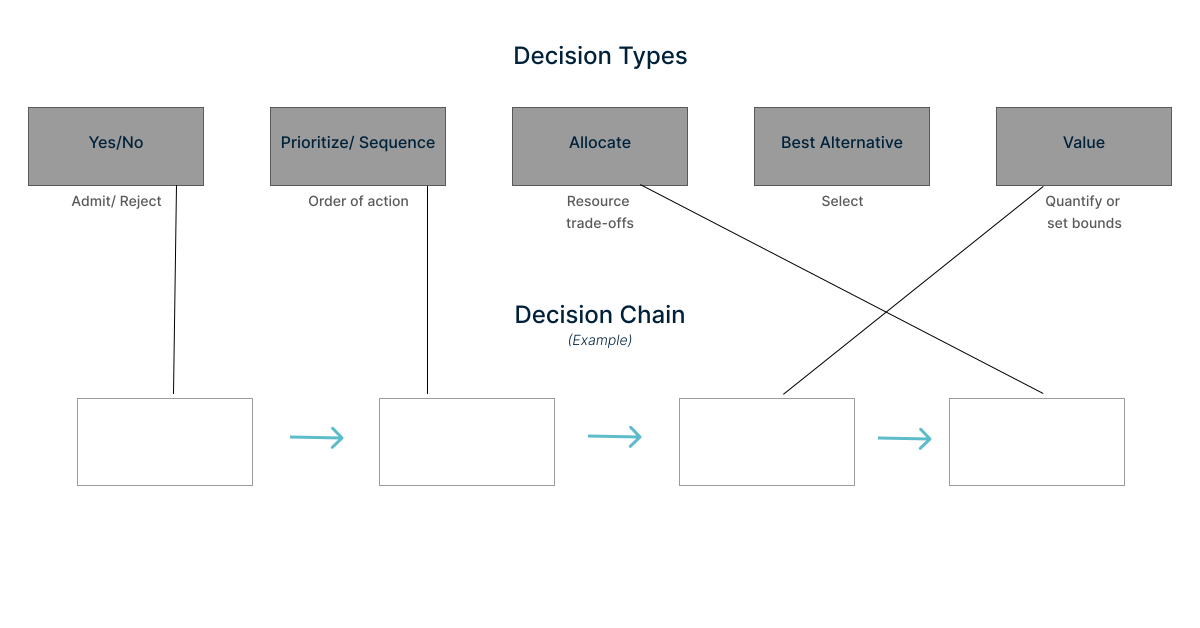
Most complex business decisions are built from a small number of recurring decision types. These types answer different questions. They require different structures. Confusing them is one of the most common — and costly — sources of decision failure.
Below are the five decision types that show up repeatedly in strategic work.
- Yes / No Decisions
Do we do this at all?
Yes / No decisions determine whether something is admissible. They act as gates. Once passed, downstream effort becomes justified; once failed, the work should stop.
These decisions are binary by nature. They are usually irreversible or expensive to reverse.
When Yes / No decisions are softened into scoring or debate, weak options are allowed into the system and consume attention, resources, and political capital they never should have touched.
Examples- Enter a new market
- Launch a product
- Approve a project
- Acquire a company
- Prioritization and Sequencing Decisions
What is the relative importance of a set of options and how should they be sequenced?
Prioritization decisions answer ordering questions, not funding questions. These decisions are ordinal. They are almost always capacity-constrained. Time, attention, and execution bandwidth matter more than theoretical value.
When prioritization is confused with allocation, organizations pretend they can do everything at once. The result is chronic reprioritization, slow progress, and exhaustion.
Examples- Product roadmap sequencing
- Initiative backlogs
- Market entry order
- Allocation Decisions
How much goes where?
Allocation decisions divide a fixed pool of resources across competing uses. Trade-offs are explicit. Gains in one place necessarily reduce investment elsewhere.
|
These decisions are zero-sum and are the natural home of optimization — once the set of options is clean. When allocation decisions are treated as consensus exercises, resources drift toward political stability instead of economic strength.
Examples- Budget by function
- Marketing spend by channel
- Headcount by team
- Best Alternative Decisions
Which path or product should I choose from a set of alternatives?
Best alternative decisions choose among multiple options for the same underlying objective. They are conditional: the answer depends on constraints established earlier in the chain.
These decisions are often implicit, made by default rather than design. When best alternatives are not examined explicitly, organizations accept the first vision proposed — regardless of whether it is the best use of resources.
Examples- Scope A vs. Scope B
- Build vs. buy
- Vendor selection
- Location selection
- Value Decisions
How much/many?
Value decisions express what something is worth under uncertainty and serve as inputs to other decisions.
They are rarely made in isolation; strategic assumptions and constraints shape the value that is ultimately applied. When value decisions are treated as exercises in precision, teams argue about numbers instead of confronting the assumptions beneath them.
Examples- Price
- Number of employees
- Discount rate
- Willingness to pay
Decision Chains
Complex decisions are rarely single choices. They are decision chains — sequences of different decision types that must be handled in the right order.
Each decision in the chain can:
- Answer a different question
- Produce inputs for the next step
- Constrain what follows
Most organizations apply a single decision process end-to-end: one meeting format, one scoring model, one governance ritual. That uniformity feels efficient. It is not.
Misclassifying an early decision distorts everything downstream. Weak options pass admission gates. Priorities ignore capacity. Allocations optimize noise. Value disagreements stay hidden until it is too late.
Decision quality is not determined by how smart the analysis is at any one step. It is determined by whether the right type of decision is being made at the right moment — and whether each step hands clean inputs to the next.
That is what decision chains make visible.
Worked Example: Strategic Planning as a Decision Chain
A strategic plan is often described as a single decision: approve the plan.
In practice, it is a chain of distinct decision types, each answering a different question and constraining the next.
Seeing this chain clearly is what turns strategic planning from a ceremony into a system.
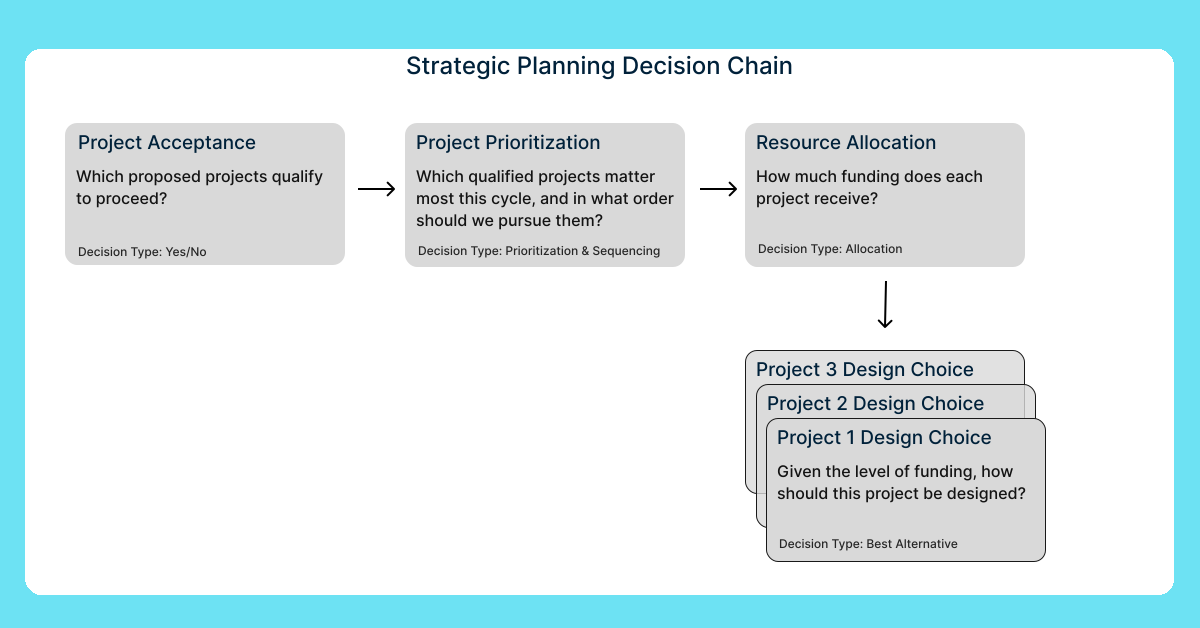
The diagram shows strategic planning as a sequence of distinct decision types, not a single approval event. Each step answers a different question and constrains what follows.
Most planning failures come from collapsing these decisions into one process or handling them out of order.
- Acceptance is a gate, not a ranking
The first decision determines which proposed projects qualify to proceed at all. This is a binary gate — admissible or not.
It is not about funding or relative value. It is about whether a project meets non-negotiable criteria. When this gate is weak, poor projects enter the system and consume attention for the rest of the cycle. No downstream analysis can undo that damage. - Priority creates focus before money is discussed
Once the set is clean, the next decision establishes relative importance and sequence.
This step answers what matters now under real capacity constraints. It does not allocate budget. When prioritization is skipped or blended with allocation, organizations behave as if everything can be done at once — and execution predictably suffers. - Allocation makes trade-offs explicit
Only after priorities are clear does it make sense to decide how much funding each project receives.
Allocation is zero-sum. Funding one project necessarily reduces resources elsewhere. This is where value assumptions — total budget, risk tolerance, exposure limits — become binding. Allocating before prioritizing distributes resources efficiently across the wrong things. - Design is conditional, not aspirational
The final step selects the best feasible design for each funded project, given its assigned resources.
This decision is often implicit, which is why mismatches between ambition and funding persist into execution. When design choices are made explicitly and conditioned on allocation, execution becomes realistic rather than hopeful.
The point of the chain
The plan does not exist at the start. It emerges through the sequence.
Each step answers a different question and requires different discipline. Treating them as one undifferentiated process feels efficient, but it guarantees late-stage conflict and weak follow-through.
Other Decision Chains
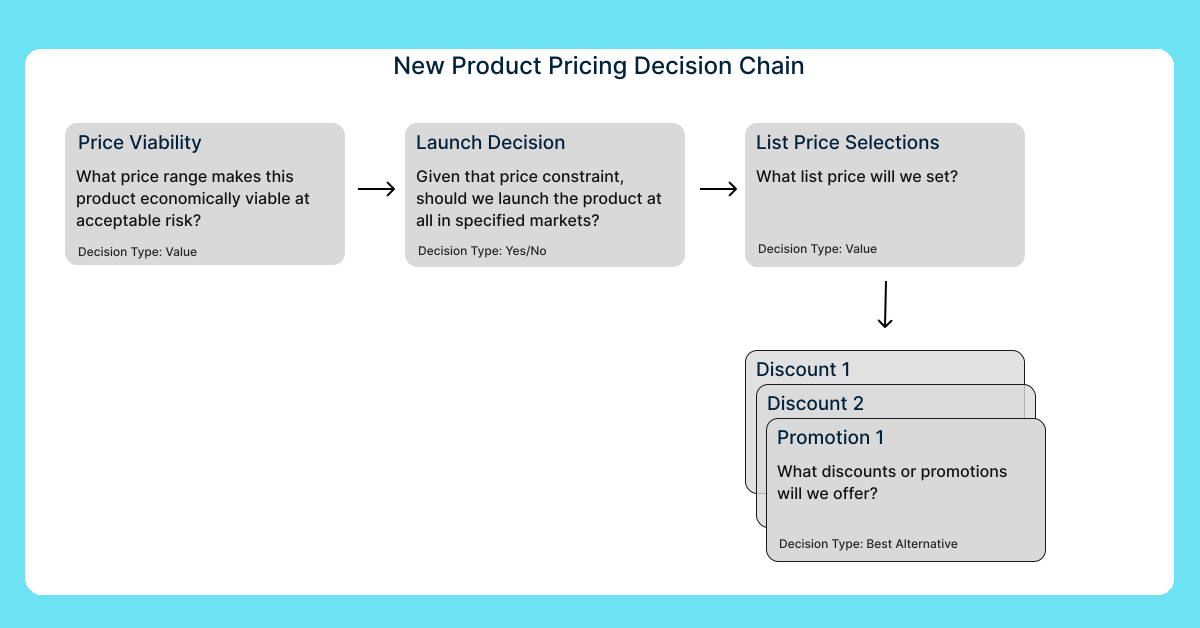
Pricing a New Product — Decision Chain
Pricing a new product looks like a single number, but it is a short decision chain that moves from viability to commitment.
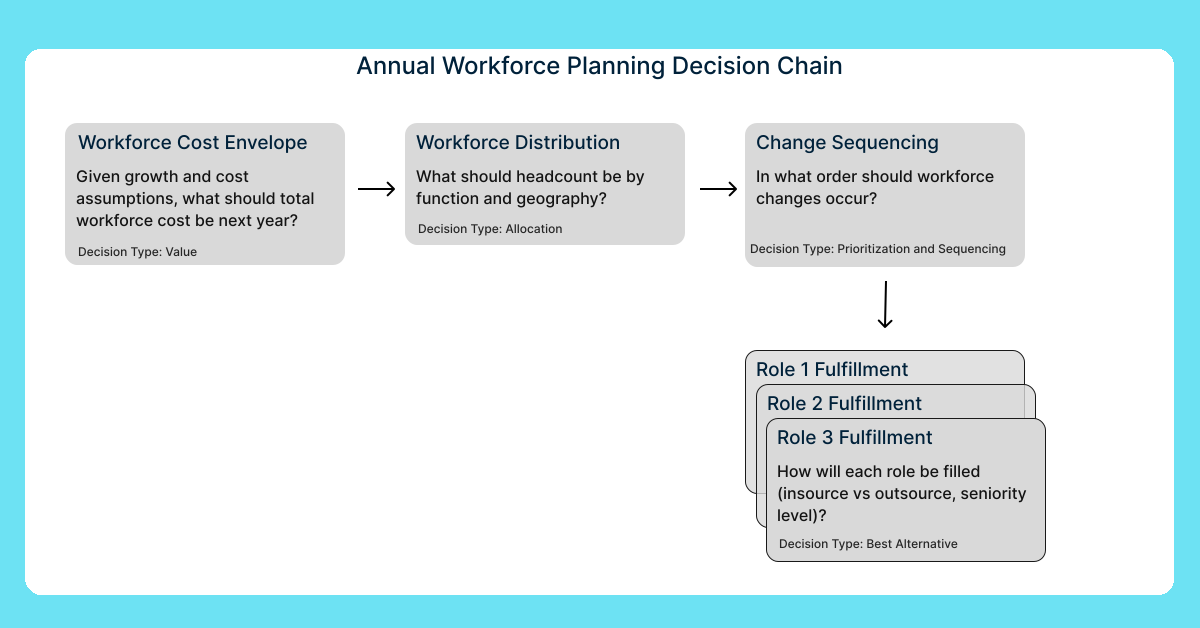
Annual Workforce Planning
Workforce planning is not a single headcount decision, but a chain that translates financial intent into executable staffing changes.
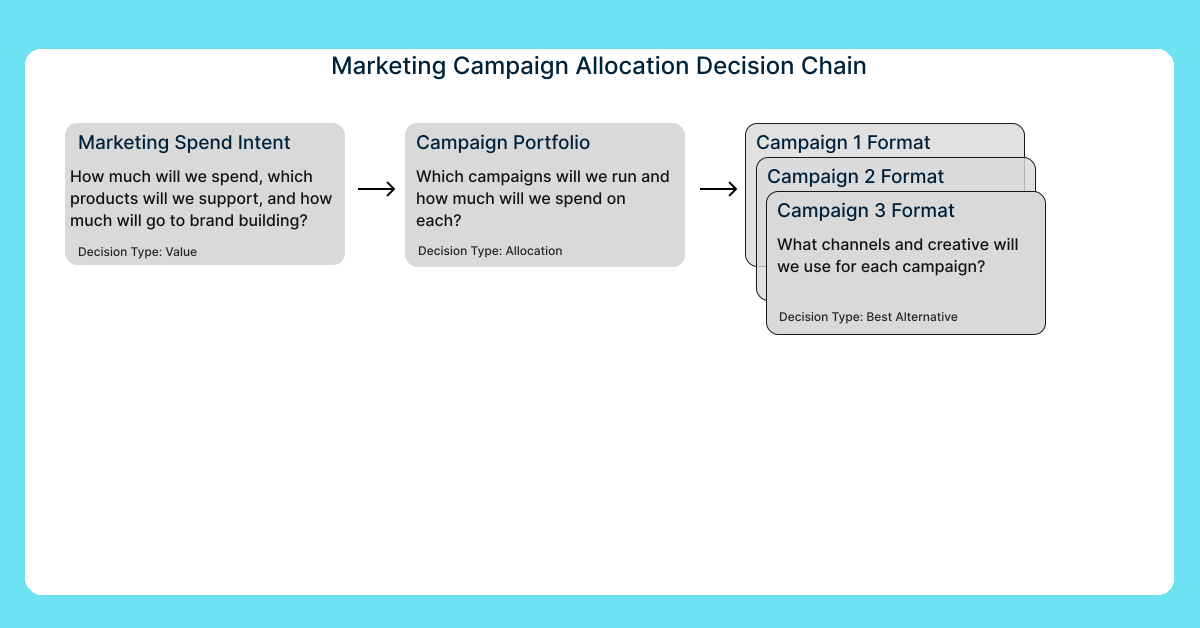
Marketing Campaign Allocation
Marketing decisions fail when spending, campaigns, and execution choices are collapsed into a single budgeting exercise.
Conclusion: Stop Improving Decisions You Haven’t Identified
Most organizations believe they have a decision problem when what they actually have is a decision-definition problem.
They invest in better analysis, better dashboards, better models — all applied to a process that quietly collapses multiple decision types into one. The result feels rational and disciplined, but it is structurally broken. Trade-offs surface late. Alignment erodes under pressure. Execution drifts away from intent.
The fix is not more rigor. It is earlier clarity.
Every strategic outcome is shaped long before optimization begins — by which questions are asked, in what order, and under what decision logic. Yes / No gates determine what is even allowed into the system. Priorities shape attention before money is discussed. Allocation forces real trade-offs. Design choices must respond to constraints rather than wishful scope. Value decisions quietly bind everything that follows.
When those decisions are misidentified or merged, downstream excellence cannot recover the loss.
Decision Intelligence does not mean automating judgment.
It means structuring judgment correctly.
If you want better outcomes, start here:
- Take your last major decision.
- Write down every distinct question that had to be answered.
- Label each by decision type.
- Then look honestly at your process.
If everything was handled the same way, the outcome was constrained before execution began.
That’s the real work of Decision Intelligence — and the work most organizations skip.