
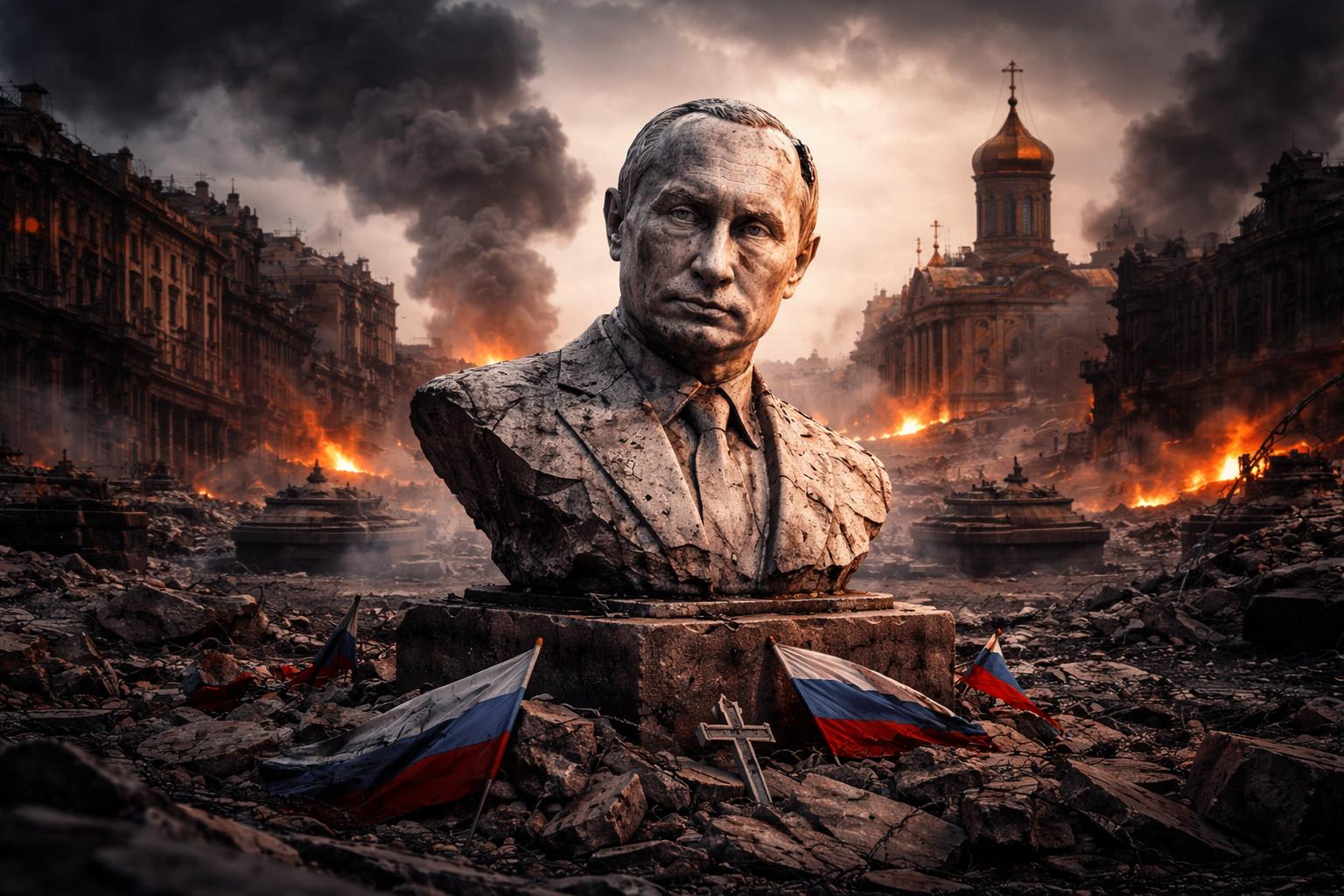
Putin's Russkiy Mir ("Russian World") strategy is failing across nearly every measurable dimension, militarily, culturally, demographically, and geopolitically, though the ideology itself remains central to Kremlin governance and shows no sign of being abandoned. The war in Ukraine, intended to be the strategy's ultimate vindication, has instead become its most devastating repudiation.
This analysis examines the structural collapse of Russkiy Mir as a soft-power project across four diagnostic vectors: the Ukraine crucible, military and territorial failure, collapsing influence across the post-Soviet periphery, and the demographic and economic implosion eroding Russia from within. It concludes with the strategic paradox that makes this failure dangerous: a weakened Russia that cannot surrender its imperial vision is more volatile, more risk-tolerant, and more structurally reliant on disruption than a rising one.
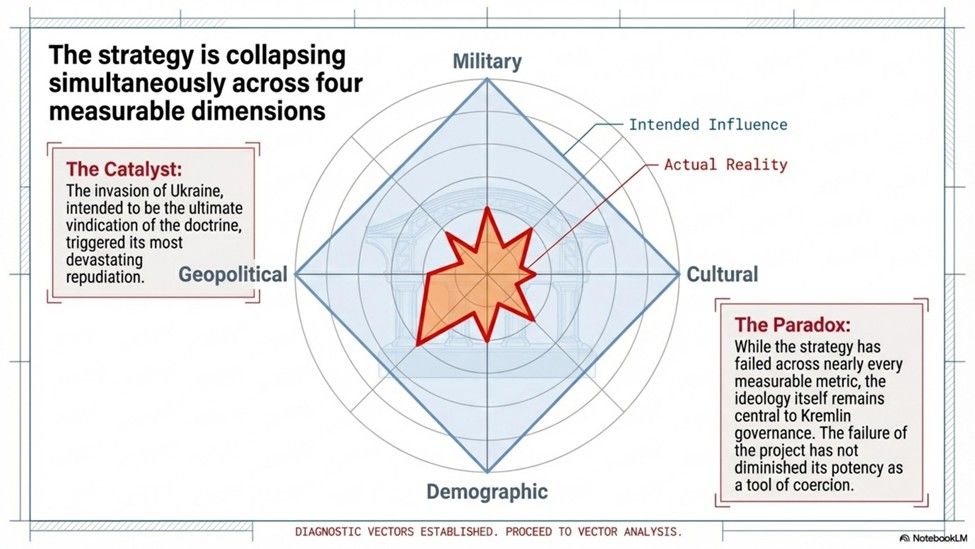
Figure 1: The Russkiy Mir strategy is collapsing simultaneously across four measurable dimensions.
THE DOCTRINE AND ITS AMBITIONS
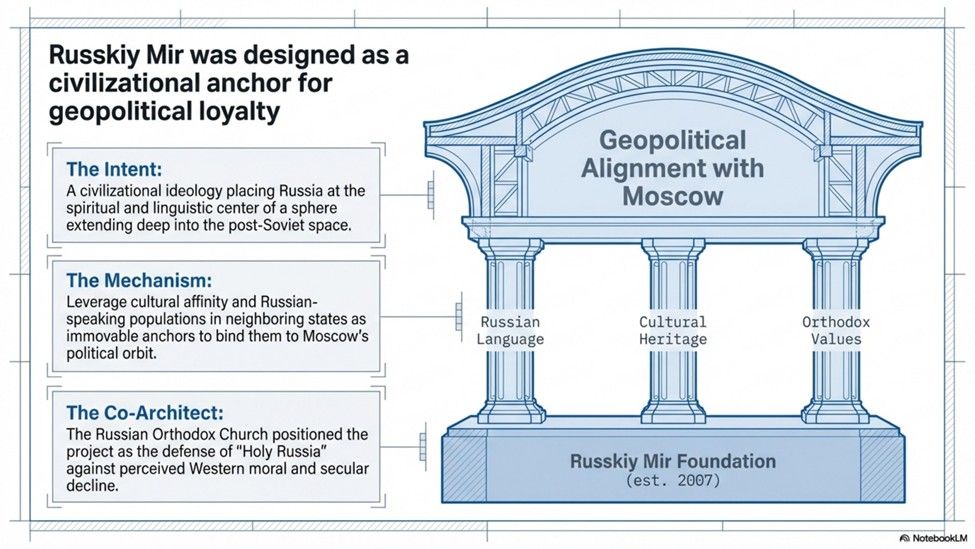
Figure 2: Russkiy Mir was designed as a civilizational anchor for geopolitical loyalty.
Russkiy Mir is a civilizational ideology asserting that Russia sits at the center of a distinct cultural, spiritual, and linguistic community that extends beyond its borders into Ukraine, Belarus, and other post-Soviet states. Putin established the Russkiy Mir Foundation in 2007 to institutionalize this vision, promoting the Russian language, culture, and Orthodox values worldwide through cultural centers in more than 45 countries.
The Russian Orthodox Church became a co-architect of the project, framing it as a defense of "Holy Russia" against Western secularism and what it describes as moral decline.
The doctrine's operational logic was straightforward: Russian-speaking populations in neighboring states would serve as anchors of political loyalty to Moscow, and cultural affinity would translate into geopolitical alignment.
Three pillars supported the structure. The Russian language served as the medium of cultural transmission. Cultural heritage provided the historical narrative binding populations to Moscow. Orthodox values provided the moral architecture that distinguished the "Russian World" from Western liberalism. The Russkiy Mir Foundation, established in 2007, was the institutional vehicle designed to project these pillars outward into the post-Soviet space and beyond.
The ambition was not modest. Moscow sought to build a sphere of influence rooted not in coercion but in attraction. The assumption was that shared language, shared religion, and shared history would create a gravitational pull strong enough to keep neighboring states within Russia's orbit without the need for military force.
That assumption has been destroyed.
THE UKRAINE CRUCIBLE
Ukraine was the supreme test case for Russkiy Mir, and its failure there is the most consequential.
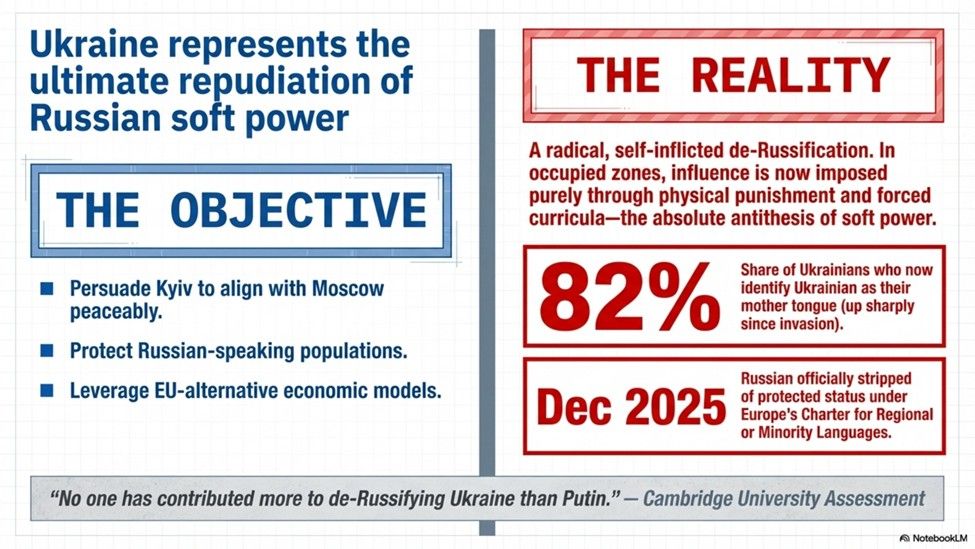
Figure 3: Ukraine represents the ultimate repudiation of Russian soft power.
Academic research has documented that Russian soft power built around the "Russian World" model was unable to persuade Kyiv to align with Moscow through peaceable means. EU-inspired values of liberal democracy and economic development proved more attractive, ultimately forcing Russia to resort to military force.
Rather than welcoming Russian "liberation," Ukrainians, including millions of native Russian speakers, have undergone a radical de-Russification. About 82% now identify Ukrainian as their mother tongue, up sharply from before the invasion. Streets are being renamed. Russian-language books are being replaced. Monuments to Russian and Soviet figures are being demolished. Ukraine's parliament stripped Russian of its protected status under Europe's Charter for Regional or Minority Languages in December 2025.
As one scholar at Cambridge University put it: "No one has contributed more to de-Russifying Ukraine than Putin."
The Kremlin used the protection of Russian speakers as a central justification for invasion, yet the war itself has driven the very population it claimed to protect into an aggressive rejection of Russian identity.
In occupied territories, Russian influence is imposed through coercion alone: forced curriculum changes, physical punishment of children who speak Ukrainian, and threats against parents. This is the antithesis of soft power. It is the admission that the project of attraction has failed so completely that only violence remains.
The scale of this self-inflicted wound is difficult to overstate. Before 2014, Ukraine was the jewel of the Russkiy Mir project, a country with deep Russian-language penetration, extensive family ties across the border, shared Orthodox traditions, and centuries of intertwined history. Moscow assumed these bonds were unbreakable. The invasion proved they were not bonds at all. They were conditions that existed in the absence of better alternatives. When forced to choose, Ukrainians chose Europe. When forced to fight, they chose independence.
MILITARY AND TERRITORIAL FAILURE
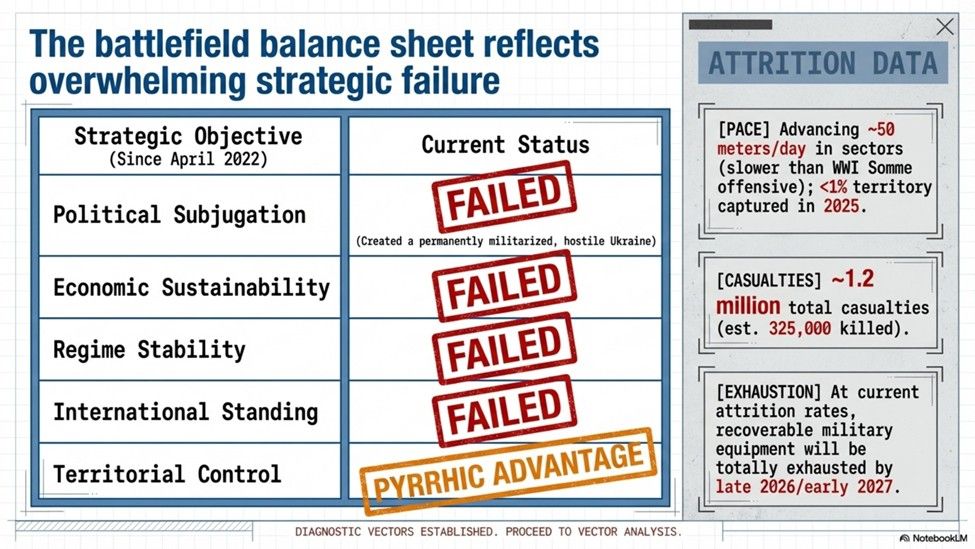
Figure 4: The battlefield balance sheet reflects overwhelming strategic failure.
On the battlefield, Russia has failed in four of its five strategic objectives since retreating from Kyiv in April 2022: political subjugation, economic sustainability, regime stability, and international standing. Only in territorial control does it retain an advantage, and that advantage is pyrrhic.
Despite holding the initiative throughout 2025, Russia captured less than 1% of additional Ukrainian territory, advancing roughly 50 meters per day in some sectors, slower than the World War I Somme offensive. Russian forces have suffered approximately 1.2 million casualties, including an estimated 325,000 killed, since February 2022. At current attrition rates, Russia's recoverable military equipment will be exhausted by late 2026 or early 2027.
Instead of a neutral or pliable neighbor, Russia now faces a permanently militarized, hostile Ukraine with one of Europe's most experienced land forces. This is a strategic nightmare for Moscow, directly contradicting every objective of Russkiy Mir.
The military math tells a story the Kremlin refuses to acknowledge publicly. Territorial gains measured in meters per day do not constitute strategic progress. They constitute managed decline. The equipment-exhaustion timeline from late 2026 to early 2027 imposes a hard ceiling on conventional military options. The casualty figures, approximately 1.2 million total with an estimated 325,000 killed, represent a generational demographic wound layered on top of an already collapsing population structure.
Russia did not gain a buffer state. It created a permanent adversary. It did not secure its western flank. It militarized it. It did not demonstrate power. It revealed the limits of power when deployed against a population that refuses to submit.
COLLAPSING INFLUENCE IN THE POST-SOVIET SPACE
Beyond Ukraine, Russkiy Mir is losing its grip across the entire former Soviet periphery.
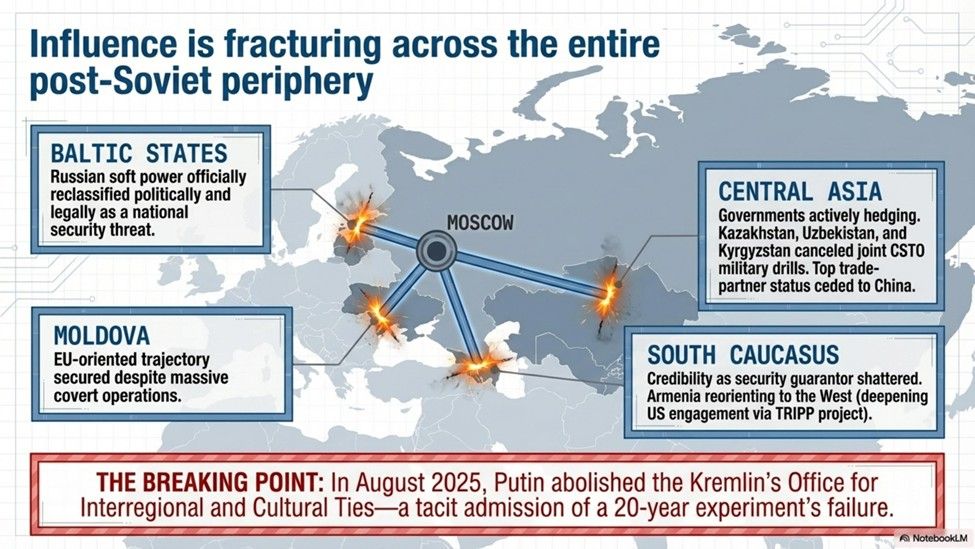
Figure 5: Influence is fracturing across the entire post-Soviet periphery.
South Caucasus
Russia's failure to prevent the 2023 Armenia-Azerbaijan conflict severely damaged its credibility as a security guarantor. Armenia, once Russia's closest regional ally, is reorienting toward the West, with the United States now deeply engaged through the TRIPP infrastructure project. The message to the region is clear: Moscow will not protect you, and alternatives exist.
Central Asia
Governments in Kazakhstan, Uzbekistan, and Kyrgyzstan are hedging among Russia, China, the EU, Turkey, and the United States. Russia has ceded top trading-partner status in the region to China. Uzbekistan left the CSTO years ago. In 2023, both Kazakhstan and Kyrgyzstan canceled joint CSTO military drills.
Central Asia's hedging strategy reflects rational calculation, not ideology. These governments are reading the same signals this analysis identifies: Russia's structural capacity is declining, its economic leverage is weakening, and its security guarantees carry no credibility. The diversification of partnerships is not disloyalty. It is risk management.
Moldova
Despite extensive covert operations and propaganda campaigns, Moscow's soft-power efforts failed to prevent Moldova's EU-oriented trajectory. Moldova represents a clean case study in the limits of information warfare when the target population has access to alternative narratives and institutional pathways toward integration with a more attractive partner.
Baltic States
Political and legal restrictions have systematically diminished the effect of Russian soft power, which is now treated as a national security threat rather than cultural outreach. The Baltics have reclassified Russian cultural institutions not as diplomatic assets but as instruments of hostile influence. This reclassification carries legal consequences, funding restrictions, and operational constraints that render the Russkiy Mir infrastructure effectively inoperable in these states.
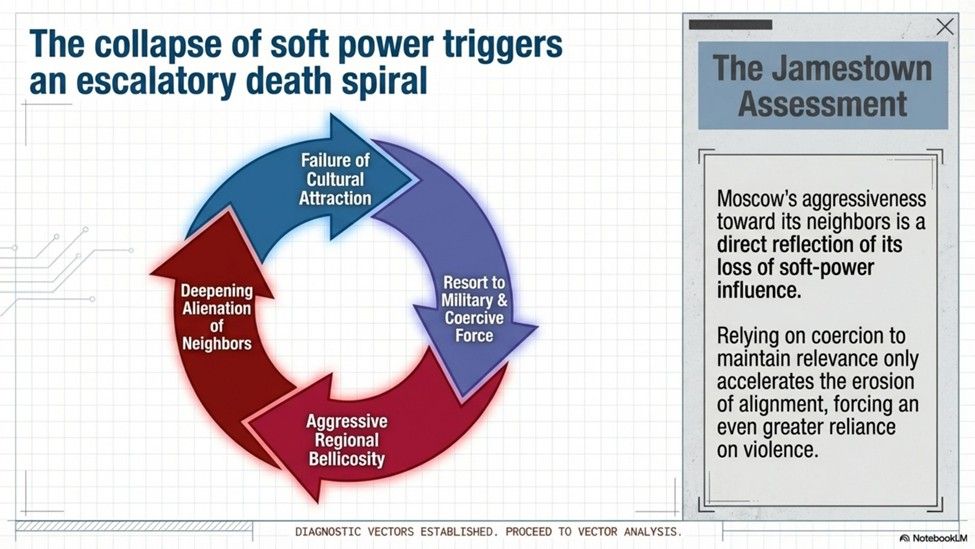
Figure 6: The collapse of soft power triggers an escalatory death spiral.
The Jamestown Foundation assessed that Moscow's aggressiveness toward its neighbors is a direct reflection of its loss of soft-power influence, and that this bellicosity only accelerates the erosion further, creating a vicious cycle. In August 2025, Putin abolished the Kremlin's Office for Interregional and Cultural Ties, a tacit admission that Russia's two-decade soft power experiment had collapsed.
The pattern is self-reinforcing. Cultural attraction fails. Moscow resorts to coercion. Coercion alienates neighbors further. Alienation demands more aggressive responses. Each cycle compounds the previous one. The abolition of the Office for Interregional and Cultural Ties in August 2025 was not a bureaucratic reorganization. It was Moscow acknowledging the end of an era, even if it could not admit it publicly.
DEMOGRAPHIC AND ECONOMIC IMPLOSION
The structural foundations of Russkiy Mir are eroding from within.
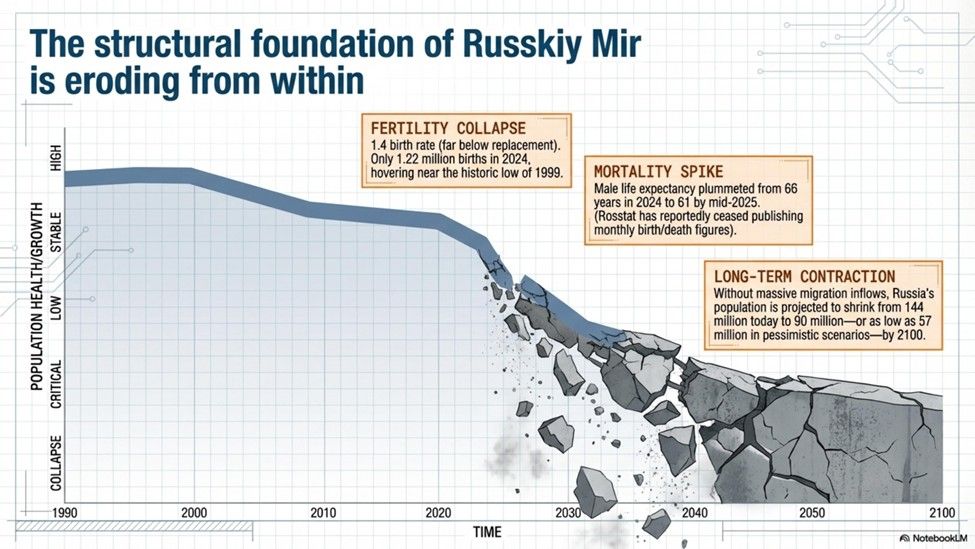
Figure 7: The structural foundation of Russkiy Mir is eroding from within.
The Demographic Collapse
In 2024, only 1.22 million children were born in Russia, near the historic low of 1999, with the fertility rate at 1.4, far below replacement level. Male life expectancy reportedly dropped from 66 years in 2024 to 61 by mid-2025, suggesting a sharp acceleration in population loss. Russia's statistical agency Rosstat reportedly stopped publishing monthly birth and death figures.
Without migration inflows, Russia's population could shrink from 144 million to 90 million by 2100, or as low as 57 million in a pessimistic scenario. A civilization project premised on the expansion and protection of a Russian-speaking world cannot survive the mathematical reality of its own population implosion.
The War Economy
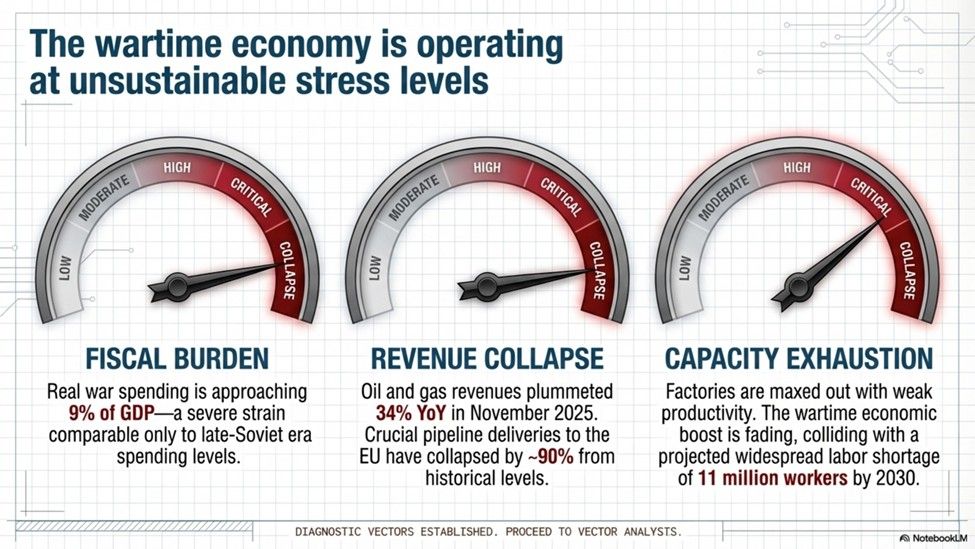
Figure 8: The wartime economy is operating at unsustainable stress levels.
The war economy is equally unsustainable. Military spending has quintupled since 2021, with the real war burden approaching 9% of GDP, levels comparable to those of late-Soviet spending. Russia's oil and gas revenues fell 34% year-on-year in November 2025. Before the war, Russia supplied 40% of the EU's gas consumption. By 2025, pipeline deliveries had collapsed roughly 90% from historical levels.
By 2026, factories will be running at full capacity. Labor shortages are widespread. Productivity is weak. The wartime economic boost is fading. A projected labor shortage of nearly 11 million workers by 2030 compounds the crisis.
Three economic indicators are now flashing critical signals simultaneously. The fiscal burden of military spending, at approximately 9% of GDP, mirrors late-Soviet patterns that preceded the systemic collapse. Revenue from hydrocarbon exports has dropped 34% year-over-year, with pipeline deliveries to the EU collapsing roughly 90%. And capacity exhaustion across the industrial base, combined with a projected 11 million worker shortage by 2030, eliminates the possibility of sustained wartime production without external support.
Each of these pressures alone would constitute a serious economic challenge. Together, they represent a structural crisis with no visible path to resolution under current policy.
THE IDEOLOGY PERSISTS DESPITE FAILURE
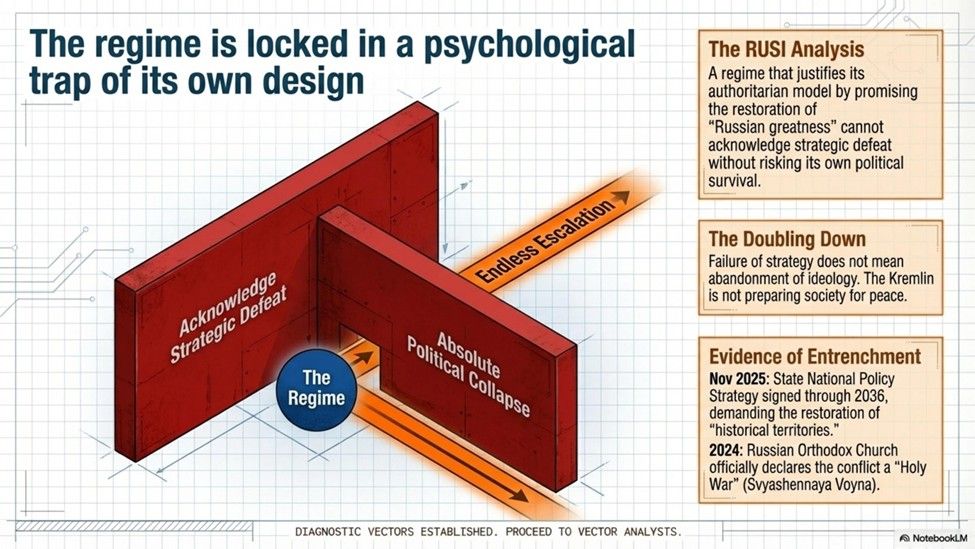
Figure 9: The regime is locked in a psychological trap of its own design.
The failure of Russkiy Mir as a strategy does not mean the Kremlin is abandoning it as an ideology.
In November 2025, Putin signed the State National Policy Strategy until 2036, decrying the "erosion of traditional Russian spiritual-moral values" and asserting that occupied Ukrainian land has "created conditions for restoring the unity of the historical territories of the Russian state."
The Kremlin remains committed to its original war objectives, including the replacement of Ukraine's government with a pro-Russian administration, and is not preparing Russian society to abandon these goals. The Russian Orthodox Church has intensified the framing, declaring the war a "holy war" (Svyashennaya Voyna) at the 2024 World Russian People's Council.
This creates what RUSI analysts describe as a psychological trap: a regime that justified its authoritarian model by promising to restore Russian greatness cannot acknowledge strategic defeat without risking political collapse. Escalation, therefore, becomes not a choice but a necessity, channeled increasingly through hybrid warfare, sabotage, cyberattacks, information operations, and nuclear rhetoric, as conventional military options exhaust themselves.
The trap is structural, not psychological in the colloquial sense. It is embedded in the regime's legitimacy architecture. Putin built an authoritarian system around a promise of restored greatness. Admitting that the war has produced the opposite of every stated objective would collapse the narrative that sustains domestic political control. The system cannot process this admission without risking its own dissolution.
So the ideology persists. Not because it is succeeding. Because abandoning it is more dangerous to the regime than continuing to fail.
STRATEGIC IMPLICATIONS
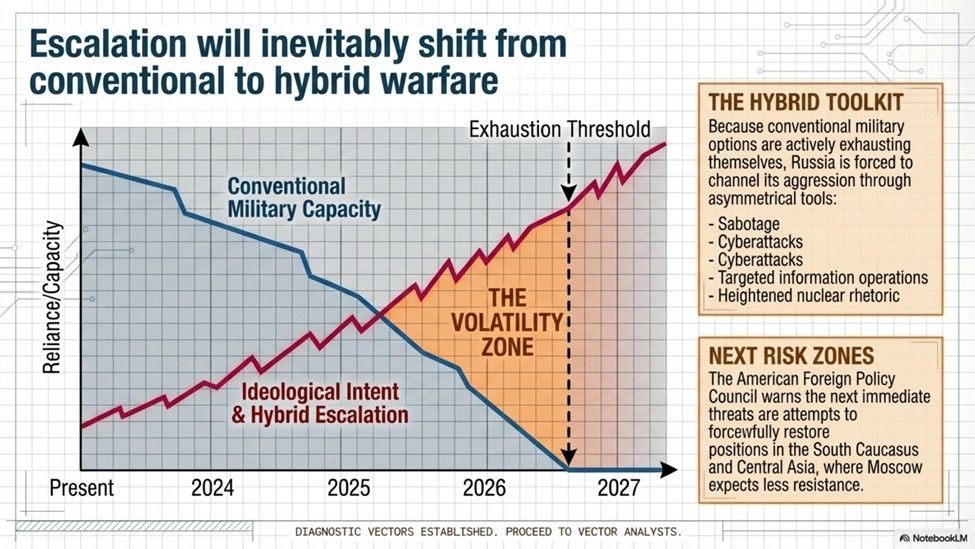
Figure 10: Escalation will inevitably shift from conventional to hybrid warfare.
From a strategic intelligence standpoint, the assessment is clear: Russkiy Mir has failed as a soft-power project but remains dangerous as an ideological driver of escalation.
The Estonia intelligence service's 2026 annual report notes that Russia, with "an ageing population and a shrinking economy," aspires to great-power status by accelerating Western fragmentation rather than through its own strength.
The American Foreign Policy Council warns that the next major risk will be Russia's attempts to restore its position in the South Caucasus and Central Asia, where it retains greater leverage and expects less resistance.
The convergence of declining conventional military capacity and persistent ideological intent creates, the accompanying analysis identifies, a "volatility zone" emerging between 2026 and 2027. As conventional options exhaust themselves, the Kremlin's toolkit shifts toward asymmetric instruments: sabotage, cyberattacks, targeted information operations, and heightened nuclear rhetoric.
This shift carries distinct implications for Western strategic posture. The threat does not diminish as Russia weakens. It changes character. A state with declining capacity but intact intent becomes more unpredictable, not less. It takes larger risks because it has fewer options and less to lose from escalation.
CONCLUSION
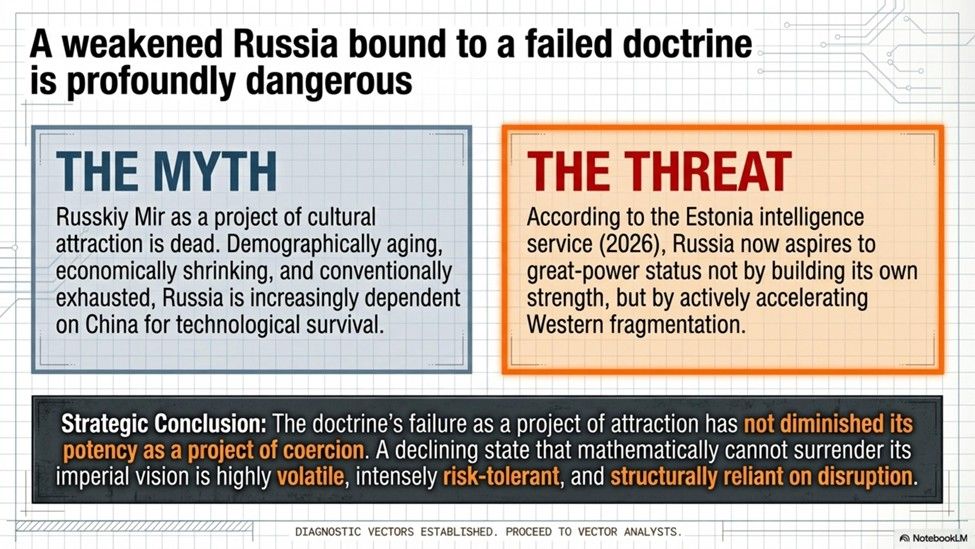
Figure 11: A weakened Russia bound to a failed doctrine is profoundly dangerous.
A weakened Russia that cannot surrender its Russkiy Mir vision is, paradoxically, more dangerous than a rising one. More willing to take risks. More reliant on hybrid tools. More dependent on China for economic and technological survival.
The doctrine's failure as a project of attraction has not diminished its potency as a project of coercion.
The myth is dead. Russkiy Mir as a project of cultural attraction is finished. Demographically aging, economically shrinking, and conventionally exhausted, Russia is increasingly dependent on China for technological survival.
The threat persists. According to the Estonia intelligence service's 2026 assessment, Russia now aspires to great-power status not by building its own strength, but by actively accelerating Western fragmentation. The strategy has shifted from construction to destruction.
The strategic conclusion is unambiguous. A declining state that mathematically cannot surrender its imperial vision is highly volatile, intensely risk-tolerant, and structurally reliant on disruption. Western policy must account for a Russia that grows more dangerous as it grows weaker. The escalation pathway runs not through Russian strength, but through Russian desperation.
The signals are consistent across every domain this analysis has examined. Military capacity is declining. Economic foundations are cracking. Demographic trends are irreversible. Regional influence is collapsing. And the ideology that drove the strategy persists without modification.
This is the paradox that defines the Russia challenge for the next decade. The failure of Russkiy Mir as a strategy does not reduce risk. It transforms it. Western decision-makers must plan not for a resurgent Russia but for a cornered one.